
Algocell DoE for Bioprocess Development
A free tool to design efficient bioprocess experiments in minutes. Auto-generate run tables, upload data, and get predictive models to optimize yield and robustness. No coding or license fee required.
Research-Use-Only Notice
The Algocell DoE platform is provided free of charge. Algocell provides the service “as is,” with no express or implied warranties, including fitness for a particular purpose. By accessing the tool you agree to Algocell’s Terms of Use and acknowledge our Privacy Policy. Do not upload confidential or proprietary information.
The Algocell DoE tool is available free of charge for scientific and commercial use. Watch the demo video below or click to start using the tool.
Watch the demo video or click to start using the tool.
Quick Start & Interface Tour
Creating a free account, navigating the sidebar, opening the design‑selector wizard, and locating help links. 3 min
Overview
The Algocell DoE platform is purpose-built for bioprocess optimization, enabling systematic exploration of process variables and rapid identification of conditions that maximize yield and product quality, and stability.
The tool supports all of the standard design types: Full and Fractional Factorial, Plackett-Burman screens, and the response-surface pair Central Composite (CCD) and Box-Behnken (BBD).
It allows examination of typical bioprocess variables (e.g., induction temperature, pH, glucose feed, biomass concentration, agitation rate, and similar factors) in different combinations, so estimates of both main effects and two-factor interaction effects can be obtained within a single experimental matrix.
As a reference point, a ten-factor study with three levels per factor would require 59,049 one-factor-at-a-time runs; an appropriate fractional factorial or response-surface layout explores the same space with fewer than 100 targeted experiments while still providing estimates of main effects, interactions, non-linear trends, and lack-of-fit.
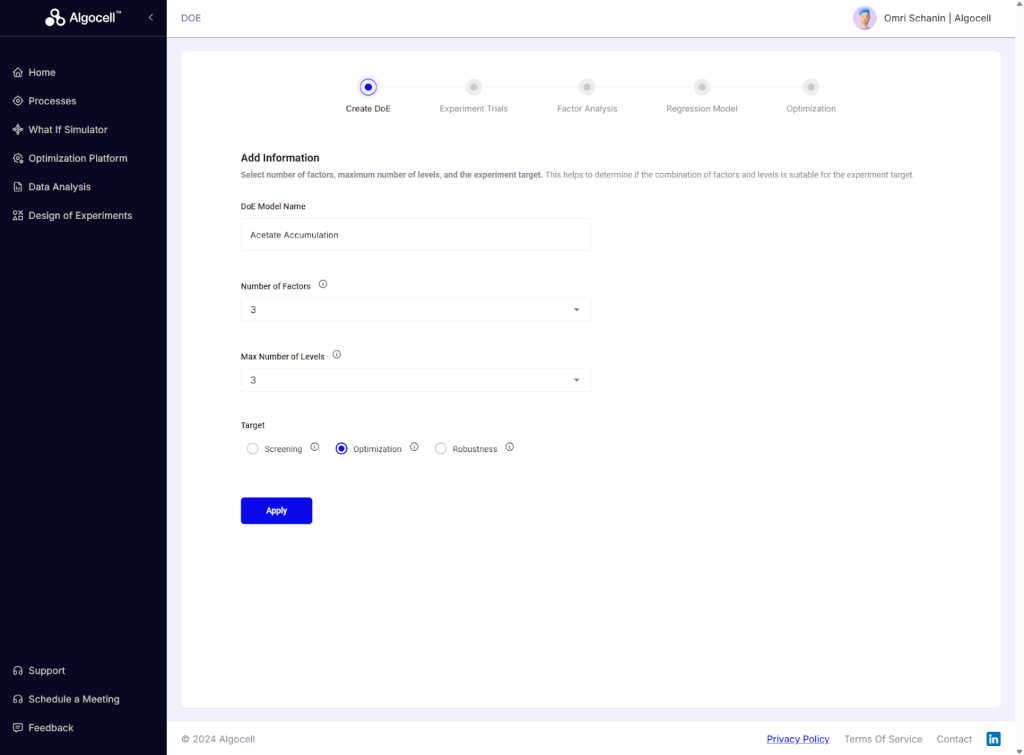
DoE Workflow: from design selection to predictions
The tool keeps the entire design-of-experiments cycle in a single interface, so each step flows directly into the next without data transfer or reformatting.
1
Expands the chosen design into a randomized experiment table and displays the total run count.
2
Export the table (CSV or PDF), carry out the trials, then enter the measured outputs.
3
Import the completed table; automatic checks flag missing or out-of-range values and confirm that the dataset is adequate for modelling.
4
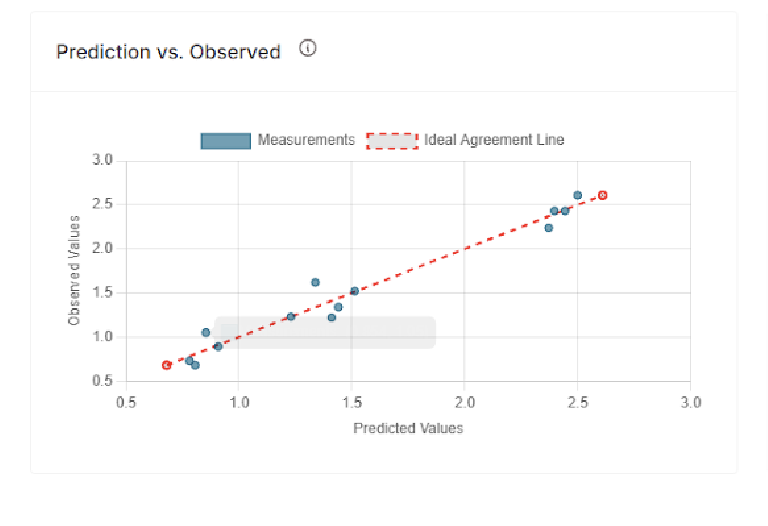
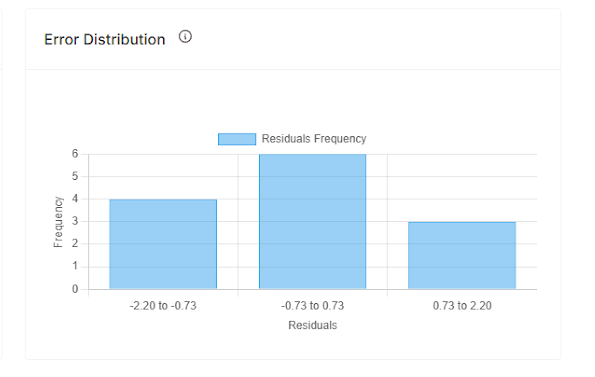
Select one of four models (linear through quadratic with interactions) and inspect R², adjusted R², p-values, parity plots, and residuals.
5
Specify an objective – maximize, minimize, or target a response – and receive recommended factor settings with confidence bounds; a prediction panel accepts custom factor values for what-if scenarios.
Outputs at Each DoE Phase
Each stage of the Algocell DoE generates a distinct data set that feeds the next step of development.
Screening
Identifying the drivers
Deliverable:
ranked main-effect estimates (plus any resolvable two-factor interactions) and associated Pareto / main-effect plots.
Method:
low-resolution fractional-factorial or Plackett-Burman designs cut the run count by roughly 70% while separating signal from noise.
Prediction
Simulating the process
Deliverable:
A calibrated regression model that functions as an in-silico simulator for the bioprocess. This allows for virtual exploration of how different combinations of process parameters will likely affect the outcome, providing insight before committing to wet-lab experiments.
Method:
The experimental data is fitted to a regression model, creating a predictive equation. This model mathematically captures the relationships between the input factors and the output responses, enabling predictions for conditions not explicitly tested in the lab.
Optimization
Locating the optimal operating point
Deliverable:
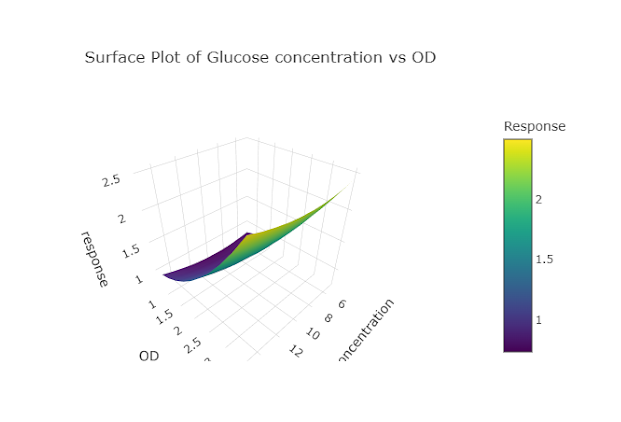
optimal condition for your bioprocess operational setting based on fitted quadratic response-surface model with coefficients, p-values, R², and contour / 3-D plots.
Method:
Central Composite or Box-Behnken layouts add axial and center points, allowing simultaneous adjustment of temperature, feed rate, biomass, and other key variables.
Robustness
Defining the Design Space for Process Control
Deliverable:
A validated Design Space that maps the specific operating ranges for process parameters that consistently achieve quality targets. This provides proven operational flexibility, ensuring the process is resilient to minor, real-world fluctuations.
Method:
The predictive quadratic model is used to analyze the region around the optimal setpoint, identifying where the process outcome remains stable. The resulting design-space plots define a proven acceptable range, satisfying the statistical documentation recommended in ICH Q8 and related FDA/EMA Quality-by-Design guidance.
Case Studies
What a statistically designed experiment looks like in practice.
To illustrate how the DoE process translates into real bioprocess gains, Algocell reproduced two peer-reviewed E. coli studies – one focused on soluble recombinant protein and the other on inclusion-body expression. In each case the tool generated the design, fitted the model, and proposed a solution that matched subsequent laboratory measurements.
Recombinant rhIFN-β
raising titre while holding acetate in check
Design chosen
3-factor Box-Behnken (induction temperature, biomass at induction, glucose feed).
Why this design
Requires only 15 mid-range runs yet supports a full quadratic model – ideal for simultaneous yield and by-product optimization.
Model prediction
0.267 g L-1 rhIFN-β; 0.961 g L-1 acetate.
Lab validation
0.255 g L-1 rhIFN-β; 0.981 g L-1 acetate – well within the model’s 95% prediction interval.
Key takeaway
Interaction between glucose feed and biomass had a larger effect on titre than either variable alone – information that would have been missed in one-factor trials.
Inclusion-body expression
turning a purification hurdle into upstream leverage
Design chosen
15-run Box-Behnken (post-induction temperature, IPTG concentration, post-induction time).
Why this design
Captures curvature without forcing cultures to extreme edge conditions – important for proteins already stressed into insolubility.
Outcome for three targets
Distinct optima were found for each protein within three days; expression levels increased enough to supply downstream refolding and functional assays.
Process benefit
Screening that would have taken weeks by one-factor methods was compressed into a single DoE cycle, freeing fermenter capacity for confirmatory work.
These studies show how a concise DoE approach can (1) identify factor interactions that shape productivity, (2) generate quantitatively reliable predictions, and (3) provide validated set-points ready for scale-up and downstream processing.
Applicable Roles
- Fermentation scientists
- Process-development engineers
- QC/QA and tech-transfer teams
- Academic laboratories
- Bioprocess engineers
- Manufacturing teams
- CRO/CDMOs